
I used to keep my crypto spread across mobile apps and a hardware wallet, thinking that splitting things up was the safest play. It worked — mostly. But then I started using a browser extension wallet for daily DeFi interactions and, honestly, it changed how I approach trading, staking, and bridging. There are trade-offs. There are real risks. Still, for on-chain activity that requires speed and convenience, a well-designed extension can be the difference between missing an opportunity and executing cleanly.
Browser extension wallets are purpose-built for interacting with web3 dapps: they inject web3 providers into pages, manage account keys, and offer quick transaction prompts. That immediacy is huge when gas spikes or a liquidity pool opens. At the same time, extensions sit on your desktop and can be targeted by browser vulnerabilities or social-engineered phishing. So the question becomes: how do you get the convenience without becoming careless?
I’ll be honest: not every extension is equal. Some feel like polished consumer products. Others are rough, confusing, or too permissive with permissions. When evaluating one, I look for a few practical things — clear account management, per-site permissions, reliable network support, and sensible UX around transaction signing. Those checks cut down on dumb mistakes and make the extension a tool, not a liability.
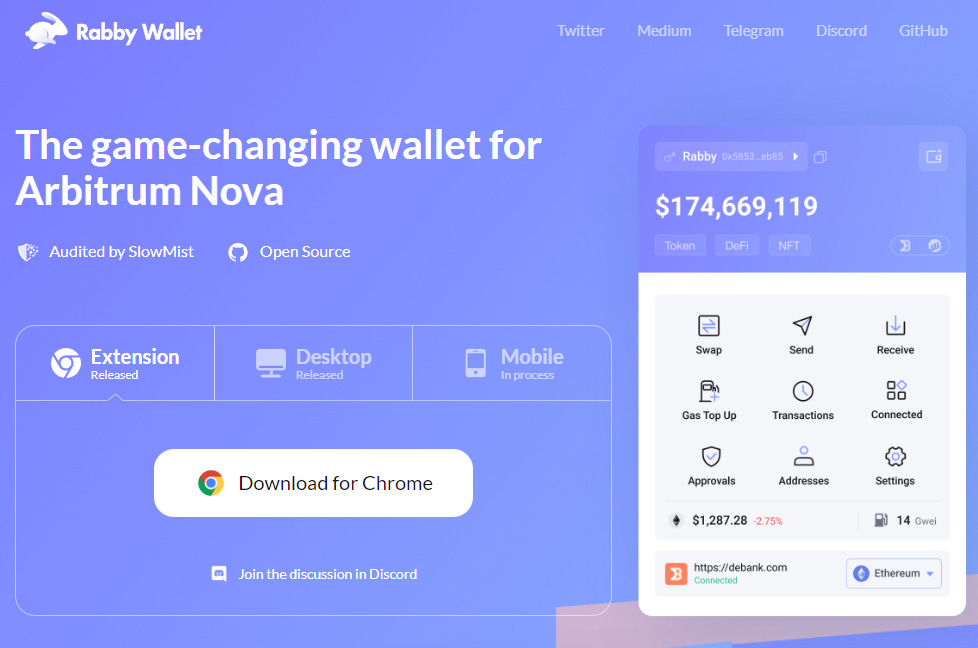
What makes Rabby stand out (and where to start)
I’ve spent time trying several extensions. Rabby caught my eye because it focuses on safety-first features without sacrificing the quick interactions DeFi users expect. It supports multiple chains, offers transaction simulation to show what a signed tx will do, and has site-based permission controls to limit what dapps can see or do. If you want to try it yourself, here’s a straightforward place to get started: rabby wallet download.
For people who are used to Metamask, Rabby often feels familiar at first glance, but then you notice differences: more granular permissions, clearer warnings on approval screens, and an emphasis on reducing accidental approvals. Those refinements matter when you’re approving ERC-20 allowances or interacting with a contract that needs multiple signatures.
Practical tip: treat your extension like a front-line device. Use it for day-to-day trades and interactions, but keep the bulk of your holdings in cold storage. That way you’re reducing exposure while retaining the advantage of quick on-chain moves when opportunities pop up.
Security habits that actually help
Security isn’t just a product feature; it’s a daily habit. Here are the few things I insist on:
- Separate accounts: use one extension account for frequent DeFi activity and another for long-term holdings. Splitting roles reduces blast radius.
- Check permissions: always review what a dapp is asking for. If a site requests unlimited token approvals, pause and consider a limited allowance instead.
- Use reputable networks and RPCs: custom RPCs can be convenient but can also be vectors for manipulation. Stick to vetted providers or your own node when possible.
- Lock your extension: set a strong password and configure auto-lock timeouts so an idle browser isn’t an open gateway.
These are basic, but they work. People often ignore them because setup feels tedious or because they assume «it won’t happen to me.» That’s exactly why phishing and sloppy approvals keep happening. Make the friction part of your routine — it pays off.
Common pain points and how Rabby addresses them
One frequent complaint is accidental approvals: you click through a transaction, and later realize you gave a contract broad permissions. Rabby mitigates this with explicit allowance management. Another pain is opaque gas estimations; Rabby surfaces simulations so you can see the steps a transaction will perform. Finally, chain support and switching can be jarring — Rabby streamlines multi-chain flows so you don’t need to juggle wallets as much.
That said, no extension will replace discipline. There will always be edge cases where manual verification or hardware-backed signing is the prudent route. On high-value transactions, I still route actions through a hardware wallet. But for everyday DeFi interactions — swaps, adding liquidity, claiming incentives — a focused extension is markedly better than clumsy mobile flows.
UX things that actually make a difference
Small UX details matter more than you’d expect. Clear labeling of accounts (so you don’t send tokens to the wrong address), descriptive transaction previews (so you understand nonces and contract calls), and easy access to revoke permissions all reduce user error. Rabby invests in these layers, and that attention to detail changes behavior: users slow down when the interface highlights risks.
Also — and this is minor but real — desktop notifications and clipboard protections prevent a large chunk of social-engineering attacks that rely on quick copy-paste mistakes. If a wallet can prevent a rushed, inattentive moment, that’s worth a lot.
FAQ
Is a browser extension wallet safe enough for large holdings?
Not as a solo solution. Use an extension for daily operations but keep the majority of funds offline or in hardware wallets. Combine both: sign high-value transactions with hardware, and use the extension for smaller, routine actions.
What if a dapp asks for unlimited token approval?
Pause. Consider approving a limited amount or using a spending cap. Many wallets allow you to set single-use or capped allowances. Regularly review and revoke unnecessary approvals.
How do I reduce exposure to phishing through extensions?
Use browser hardening: uninstall unnecessary extensions, enable strict site permissions, keep your browser updated, and use bookmarks for frequent dapps rather than clicking links from chats or emails.
To wrap up — and forgive the slight sales pitch — choosing a browser extension wallet is about aligning convenience with caution. If you prioritize quick DeFi access, pick an extension that foregrounds permissions and transaction clarity, and pair it with solid operational security. Do that, and your DeFi workflow will be both faster and safer.